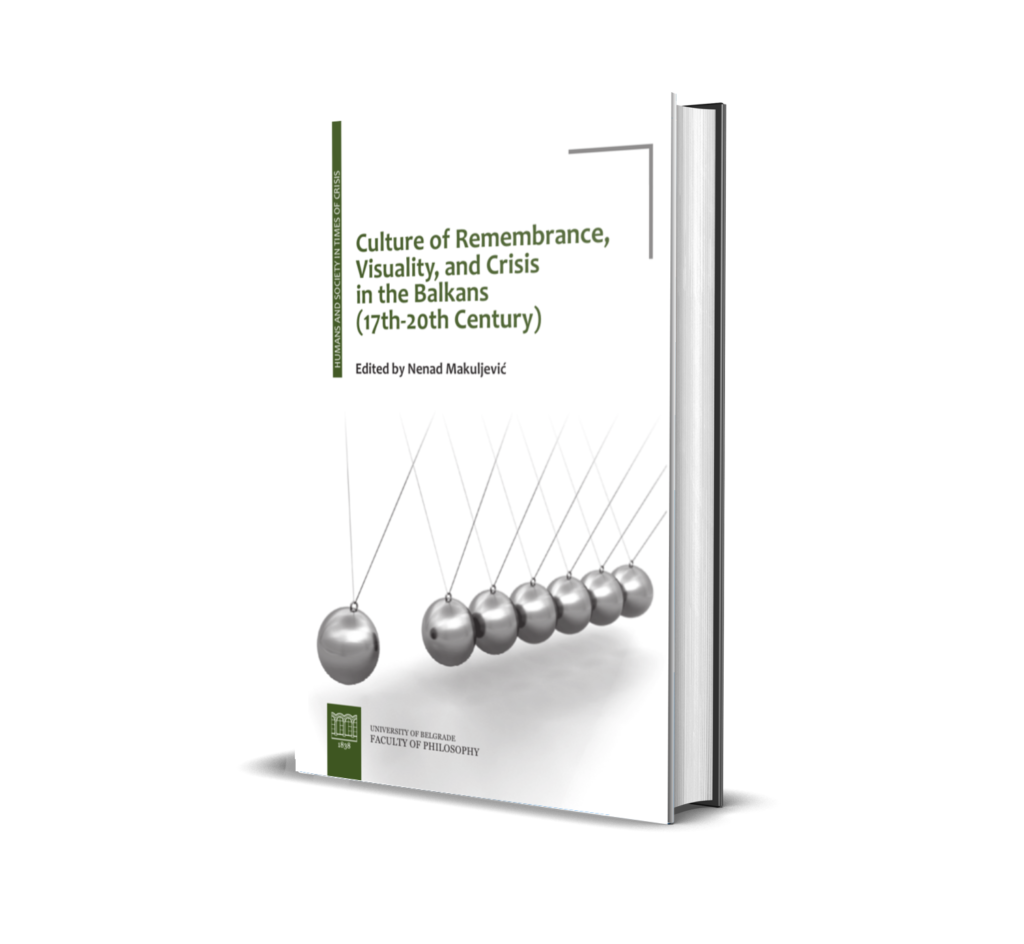
The present global crisis caused by the coronavirus pandemic brought up the question of how visual culture changes in a crisis, and what role does it play. This edited collection, written by authors pertinent to the circle of historians of the art of the early modern period from the Faculty of Philosophy in Belgrade, is an attempt at answering that question.
The collection CULTURE OF REMEMBRANCE, VISUALITY, AND CRISIS IN THE BALKANS (17TH-20TH CENTURY) is devoted to understanding the relationship between crises and visual culture in the early modern and modern periods in the Balkans. Natural disasters, communicable diseases, and wartime crises have marked the social and cultural history of the Balkans. Crises in the Balkans encumbered this geographical region, and not only in the past. This is precisely why this region is most relevant for studies of the relationship between crises and visual culture.
The authors of this collection of papers shed light on numerous examples of the relationship between crises and visual culture from the Balkan region, along with those from the Bay of Kotor and southern Hungary, between the late 17th century and WWI. Research has shown that visual culture was influenced by infectious diseases such as the plague and cholera, natural disasters such as earthquakes, and numerous wars. At the same time, visual culture suffered the direct consequences of the crises in question, but also helped overcome them, commemorate them, and even manipulate them.
Editor: Professor Nenad Makuljević, PhD